Car Insurance
12 weeks delivery time
Helping drivers understand, trust and learn from their driving data
Overview
Thousands of personal car insurance policy holders use the Zego app to track their driving using their smartphone's sensors and GPS. This data helps assess driving behaviour and informs underwriting decisions.
The product already offered clear incentives: customers who consistently drove well could earn up to £60 in rewards over the course of their policy, as well as benefiting from better pricing at renewal.
But tracking driving using telematics comes with inherent challenges. So when people received a poor score, or learned their policy might not continue, the reaction was almost always the same: they questioned the data, disputed the accuracy of the journey, and relied on their own driving experience rather than the feedback they were being shown.
Main activities
- UX heuristic audit
- Customer interviews
- Design collaboration sessions
- User testing
- Problem definition and prioritisation
- Solution roadmapping
- Design delivery
Challenge
How might we transform telematics from something customers feel judged by into something they can learn from and trust?
Telematics remains unfamiliar to many drivers. Feedback on scores and behaviours was often delivered with minimal context.
This creates a difficult dynamic:
- Drivers perceive ratings as judgement rather than coaching
- Improvements feel disconnected from outcomes
- Trust breaks down before learning can begin
Approach
How we worked
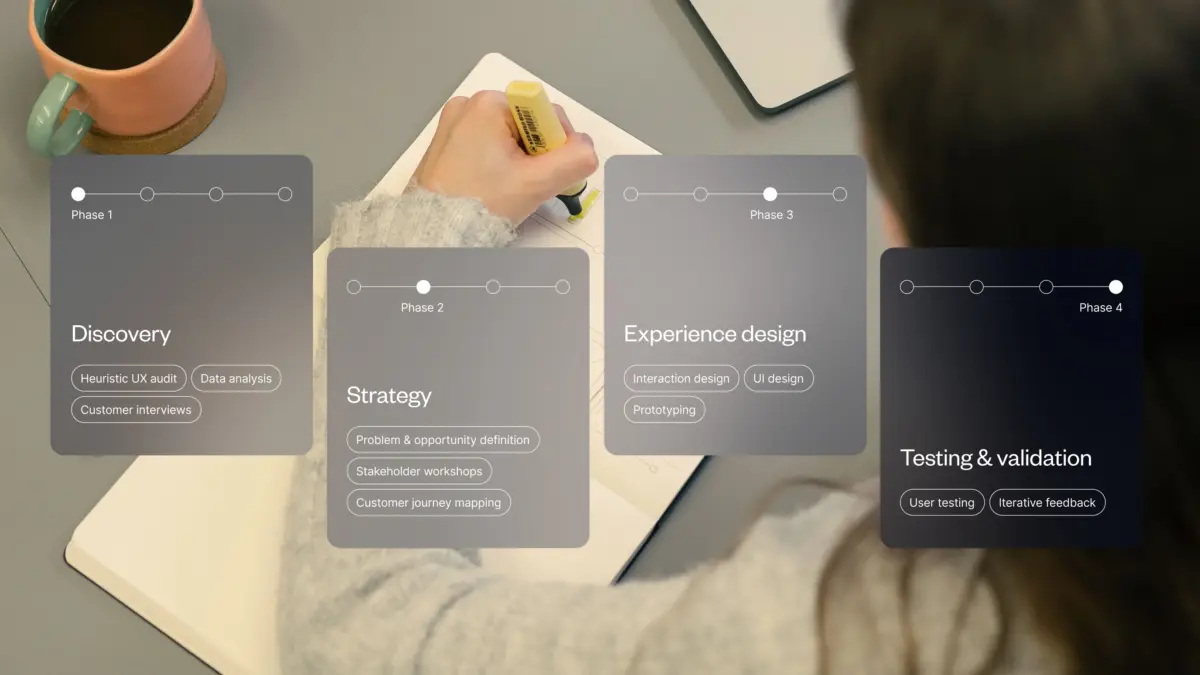
We approached the project as a strategic product and service design exercise. Our goal was to understand why drivers struggled to engage with telematics feedback and identify the most effective opportunities to improve trust, learning and long-term behaviour.
Discovery
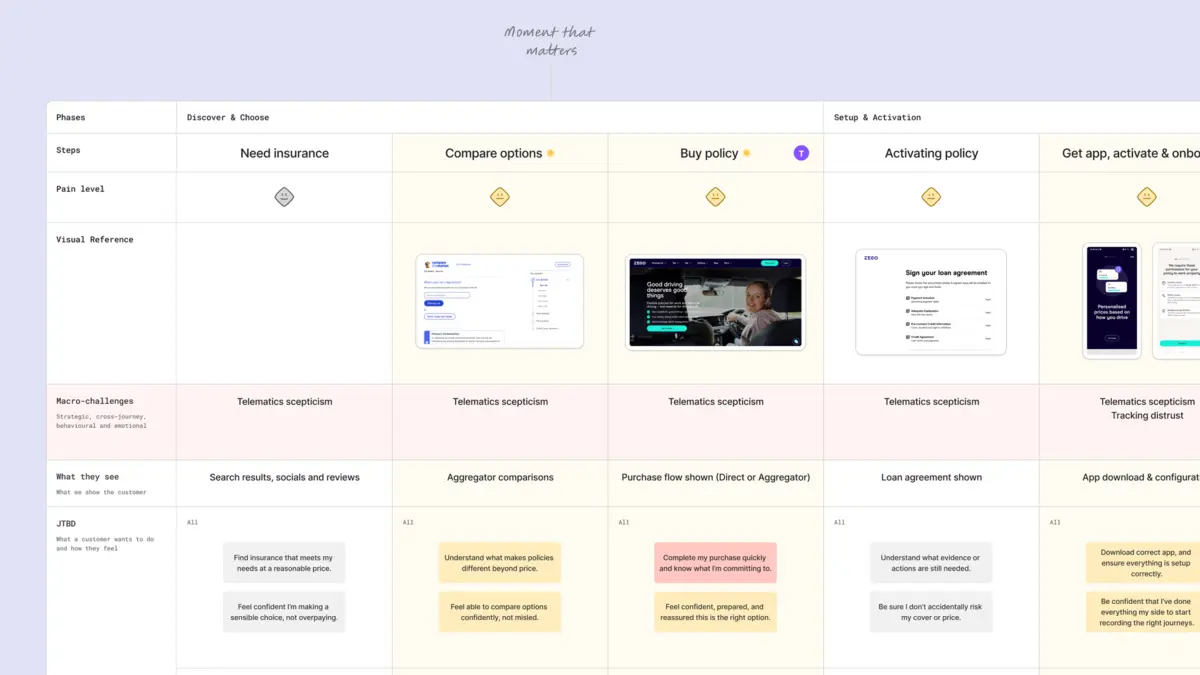
We combined research, customer interviews, data analysis and stakeholder workshops to understand where trust was breaking down across the customer journey and prioritise the biggest opportunities.
Strategy and definition
Working closely with the Zego team, we redefined the role of telematics, from a scoring system into a coaching experience focused on learning, transparency and improvement.
Experience design
We translated the strategy into end-to-end customer journeys, interaction concepts and interface designs that made telematics easier to understand and act upon.
Testing and validation
Concepts were tested with customers and refined through feedback, helping shape a solution that balanced user needs with business goals.
Solutions


From scoring to coaching
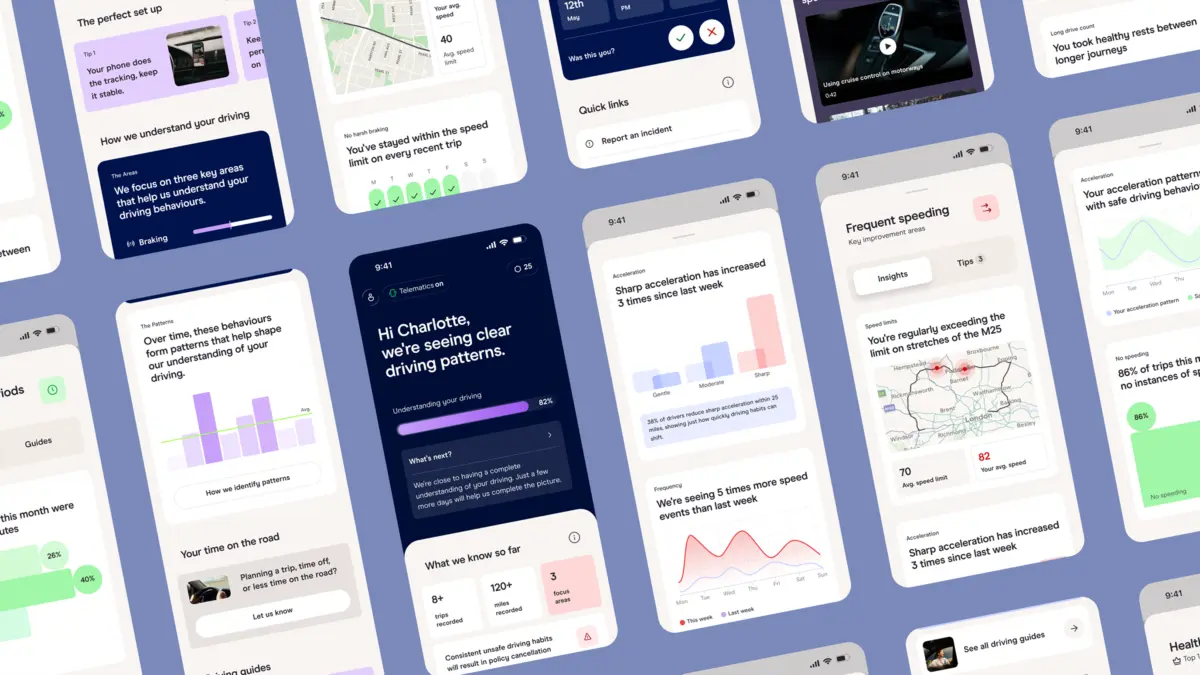
The biggest opportunity we uncovered was to rethink the role of telematics altogether. Rather than presenting driving scores as a form of judgement, we proposed a coaching model that helps customers build confidence, understand their behaviour and improve over time.
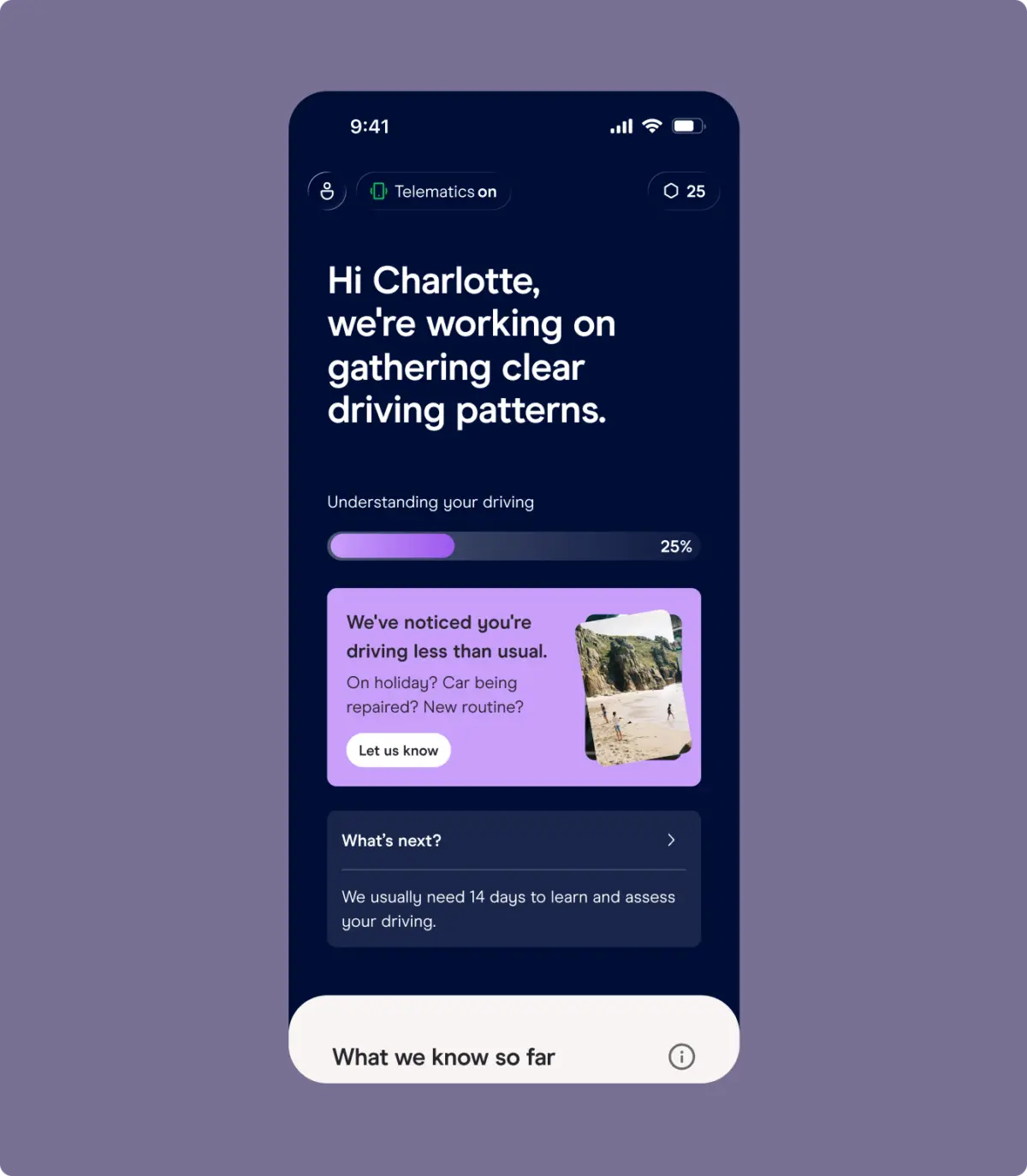
At the heart of this approach was a dedicated learning phase, allowing customers to establish a baseline, understand how telematics works and gain trust in the system before any significant policy decisions were made.


Design for trust at every touchpoint
Trust is shaped by every interaction, not just the product itself. We redesigned key moments across the customer journey, from onboarding through to policy warnings and potential cancellation, to provide clearer expectations, more transparent communication and opportunities to recover.
Alongside the journey redesign, we recommended a warmer visual language and more encouraging tone of voice, helping the experience feel supportive and aligned with Zego's business goals.
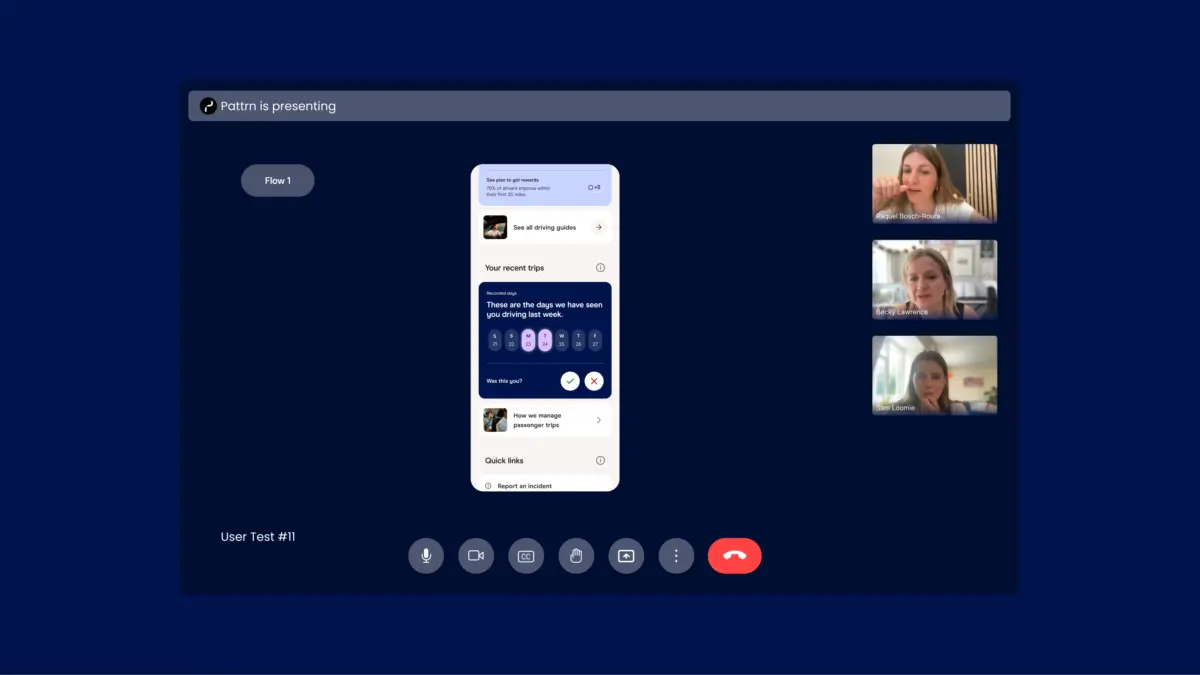
User testing validated the core idea
User testing validated the core idea: coaching changed how drivers understood and responded to telematics. The learning phase was the clearest success. By explaining how the system worked before judging performance, the experience built trust early.
And when feedback became actionable rather than punitive, drivers stopped seeing the product as something judging them and started seeing it as something helping them improve.
Summary
Our 6-sprint project with Zego paired ringfenced research and journey mapping with daily co-design sessions between our teams. The result: a redesigned onboarding experience that turns new policy holders into confident, engaged drivers from day one, and an ongoing relationship model built on trust, not just transaction.
Pattrn worked side by side with our team and challenged us to think differently about the role telematics could play. They helped us rethink the problem from the ground up, shifting from evaluating drivers to developing a whole new system and experience that helps our customers better understand and improve their driving. The result was a better product experience and a clear product vision we could execute through our roadmap.
 Sten Saar CEO, Zego
 Project impact
Made telematics easier to understand and trust
Reframed the early experience so drivers understand what Zego is learning, why it matters, and how their behaviour affects their policy – before the rating feels like a verdict.
Turned data into something customers can act on
Moved beyond a static rating towards clearer explanations, progress and coaching, helping drivers connect specific behaviours with outcomes and know what to improve next.
Created a stronger ongoing relationship with drivers
Designed a model that continues beyond onboarding through proactive feedback, encouragement and rewards – shifting telematics from passive monitoring towards an experience that gives customers value back.